Weather can change the character of a trip without making it a bad one. A garden visit might become a gallery afternoon; a long waterfront walk might work better as a short outing followed by lunch. The difficulty is rarely finding something else to do. It is finding an alternative that fits your location, budget and existing reservations. A weather-flexible itinerary gives you a few deliberate choices rather than a second, fully scheduled holiday. Build it around the experiences that matter most, then leave enough room to move the rest.
1. Sort activities by how much the weather matters
Start with your wish list and divide it into three groups: weather-dependent, weather-sensitive and mostly indoors. A scenic viewpoint or beach afternoon belongs in the first group. A neighborhood walk with frequent indoor stops might fit the second. A museum or cooking class usually belongs in the third, although getting there can still involve exposure to the weather.
Then mark the experiences that are central to your trip. If seeing a particular landscape is the main reason you are going, give that outing more than one possible day rather than assigning it to your final afternoon. For a three-day city break, you might keep two mornings available for a hilltop walk while placing less weather-dependent activities around it.
2. Create local pairs instead of a separate backup itinerary
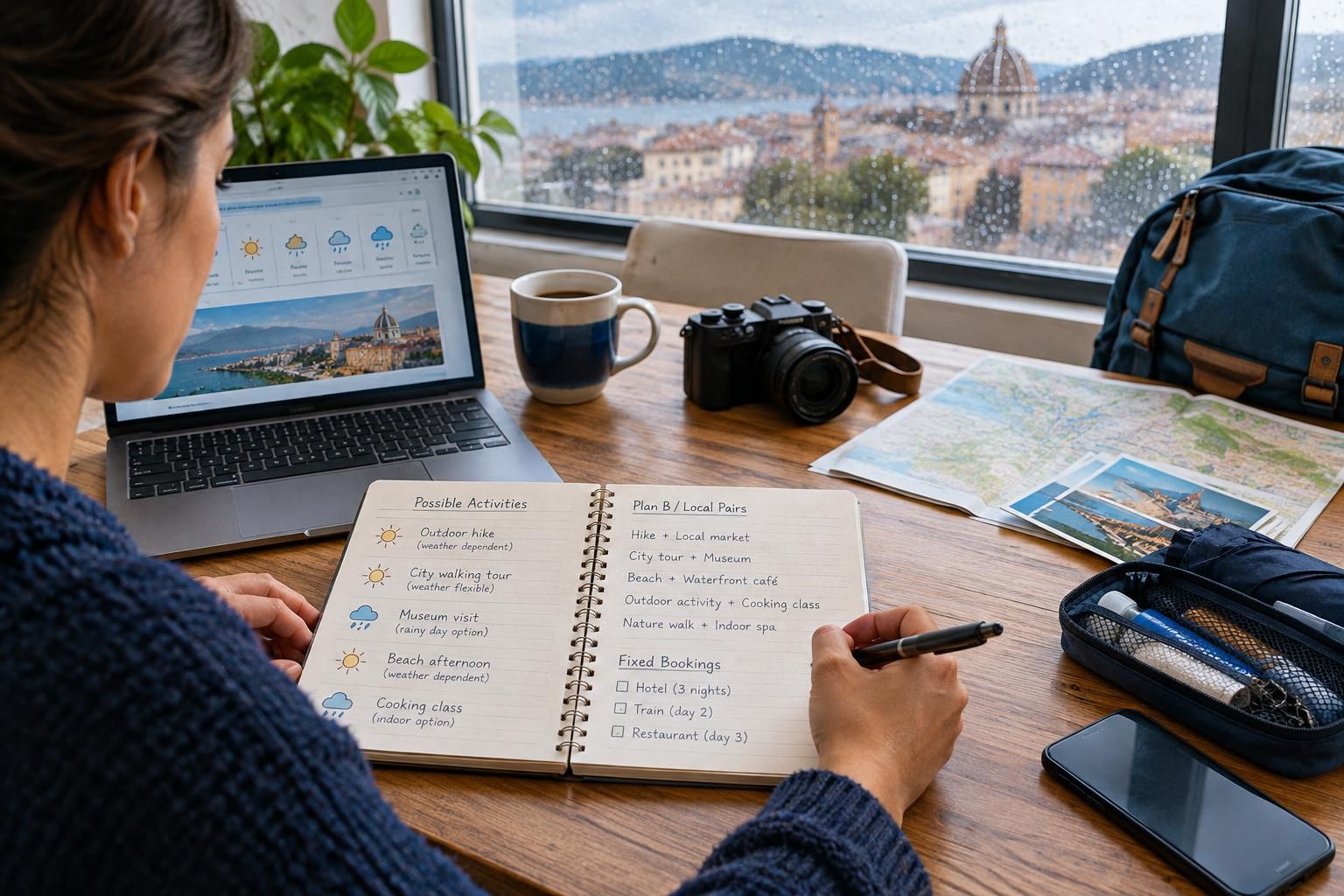
For each outdoor plan, identify one indoor alternative in the same area. Pair a riverside walk with a nearby exhibition, a public garden with a workshop, or an outdoor market visit with an indoor food-focused activity. The aim is not to find identical experiences. It is to preserve the purpose of the outing, whether that is exploring a neighborhood, enjoying local food or spending time together.
Check the practical fit before treating an alternative as usable. Consider the journey, likely visit length, whether advance booking is needed and whether everyone actually wants to go. An indoor attraction across the city is not a convenient substitute for a short walk near your accommodation. Record a simple note for each pair: area, approximate time needed and anything you must confirm before setting out.
3. Keep fixed bookings from locking the whole day
Identify the reservations that would be difficult or costly to move. These are your fixed points. Avoid surrounding every one with tightly timed outdoor plans, especially when a delayed journey or a change of clothes could disrupt the sequence. One timed experience with open space around it is easier to manage than several commitments linked by long walks.
Before paying, read the booking conditions for changes and cancellations rather than assuming flexibility. If an outdoor experience is particularly important, consider placing it earlier in the trip so another day remains possible. This creates an opportunity to rearrange, not a promise that an operator can accommodate you. Keep a worthwhile alternative for the original slot in case moving the booking is not possible.
4. Plan for the journey as well as the destination
An indoor day can still involve a long walk to a station, an exposed queue or several transfers. When comparing alternatives, look at the complete outing from your accommodation and back. A smaller attraction with a straightforward journey may be a better choice than a famous venue that requires complicated travel in unpleasant conditions.
Build one compact day around a single district. You could combine a gallery, an unhurried meal and a browse through local shops, with optional walking between them. Save the relevant addresses and a map for offline access. Also keep a simple route back to your accommodation so you can shorten the day without having to solve a new transport puzzle while tired or uncomfortable.
5. Set aside a weather-switch budget and a small day kit
Weather changes can turn a free outdoor day into a paid indoor one. Include a modest contingency in your trip budget for an admission ticket, a different transport option or a longer café stop. Choose at least one low-cost alternative as well, such as a self-guided visit to an accessible public indoor space, subject to its visitor arrangements. You should not need an expensive replacement every time plans shift.
Pack for the likely conditions without carrying equipment for every possibility. Depending on the destination and season, useful items might include a compact rain layer, sun protection, a refillable water bottle or a light extra layer. Think about where damp items will go afterward. A separate pouch for wet belongings and footwear suited to your planned walking can make changing plans less cumbersome.
6. Make the decision once, then enjoy the revised day
Choose a sensible moment to review the next day's plan, such as the evening before, and check again before departure if conditions warrant it. Use current local forecasts and any relevant operator notices. Forecasts inform a choice; they do not guarantee conditions. For exposed outings, water activities or specialist excursions, follow applicable local guidance and operator instructions rather than treating an indoor backup as the only consideration.
Agree on a simple switching point with your travel companions: if the outdoor plan no longer suits the conditions, use the paired alternative rather than debating every option again. Keep one flexible block unassigned for anything you postpone. Avoid cramming every missed activity into the remaining days; replacing one experience is often more enjoyable than turning the rest of the trip into a recovery schedule.
A useful weather plan is small: a few local alternatives, some breathing room around reservations and enough budget to change direction. Decide which experiences deserve another opportunity and which you can comfortably replace. With those choices made in advance, you can respond to the day you actually have rather than chase the itinerary you imagined.
AI-assisted evergreen travel guide. Featured image is an AI-generated illustration, not a specific product or booking.