A trip that combines warm streets, cool evenings and wet countryside can make packing feel like preparing for several holidays at once. The solution is not to bring a complete wardrobe for every stop. It is to build a small collection of clothes that work together, then add a few pieces for the most demanding conditions. Whether you are pairing a beach stay with a mountain town or crossing regions on a longer journey, this approach helps you stay comfortable without carrying everything you might conceivably need.
1. Map your conditions before choosing clothes
Start with a simple table for each destination: likely daytime conditions, evening conditions, exposure to rain or wind, and planned activities. A cool city break spent mostly indoors needs a different wardrobe from a walking holiday in similarly cool weather. Think about time outside, not just the temperature associated with a place.
Use seasonal patterns for early planning, then revisit the forecast closer to departure. Identify the warmest, coldest and wettest parts of the itinerary. Pack for plausible conditions rather than every imaginable extreme. If your plans involve snow, remote trails or other demanding environments, treat the necessary specialist clothing and equipment as a separate requirement rather than expecting an ordinary travel wardrobe to cover them.
2. Build one wardrobe around adaptable layers
Choose a base wardrobe that suits most days: comfortable trousers or shorts, several tops, underwear and socks. Select pieces that combine easily so that changing destinations does not require changing your entire outfit. Two compatible bottoms and a few interchangeable tops can create more useful combinations than several complete outfits chosen independently.
Add warmth in layers. A lightweight long-sleeved top, an insulating middle layer and an outer layer for wind or rain can work separately or together. On a warm day, wear the base layer alone; in a chilly town, add the middle layer; in wet, breezy conditions, use the outer layer as well. Check that the pieces fit comfortably over one another before packing. Tight sleeves and restrictive shoulders can undermine an otherwise sensible layering plan.
3. Count wears and laundry opportunities, not destinations
Avoid assigning a fresh outfit to every place on your route. Instead, work out how many days you expect to go between washes. For a ten-day trip with a practical laundry opportunity around the middle, you may be able to pack for roughly half the journey, with a small reserve of underwear and socks. Adjust that approach for sweaty activities, personal preferences and the effort laundry will require.
Drying time matters as much as access to washing. Lightweight garments can be easier to manage than heavy fabrics, but do not assume anything will dry overnight in a cool or humid room. Plan to wash before a longer stay rather than immediately before changing accommodation. Keep one clean outfit aside while other items dry, and carry a simple way to separate damp or worn clothes from clean ones.
4. Make shoes and outerwear earn their space
Footwear and bulky jackets often consume more luggage space than several extra tops. Start with the shoes needed for your main activity, then ask whether a second pair solves a genuine problem. Comfortable walking shoes might cover sightseeing, transport days and casual meals. A compact second pair may be worthwhile for beach time or giving your main shoes a break, but a third pair should have a clear purpose.
Apply the same test to outerwear. If a bulky coat serves only one short stop, consider whether your planned layers can reasonably cover those conditions. Do not make that substitution when the weather or activity calls for more protection. For an occasional specialist outing, investigate whether suitable equipment rental is an option before deciding what to carry; do not assume it will be available or fit your needs.
5. Pack for transitions as well as destinations
Some of the most awkward temperature changes happen during a single travel day: a warm station, a cool carriage, a windy arrival platform and an uphill walk to your accommodation. Keep a useful layer accessible rather than buried beneath everything else. An outer layer near the top of your bag is more useful than one that requires unpacking on the pavement.
Organize by function instead of packing a separate bundle for every climate. Keep everyday clothes together, small cold-weather accessories in one pouch, and rain protection easy to reach. If you are checking luggage, carry essential personal items and a modest change of clothing in your smaller bag, within the applicable transport restrictions. The goal is to make delays and temperature changes less disruptive, not to duplicate the contents of your main bag.
6. Test the packing list against real days
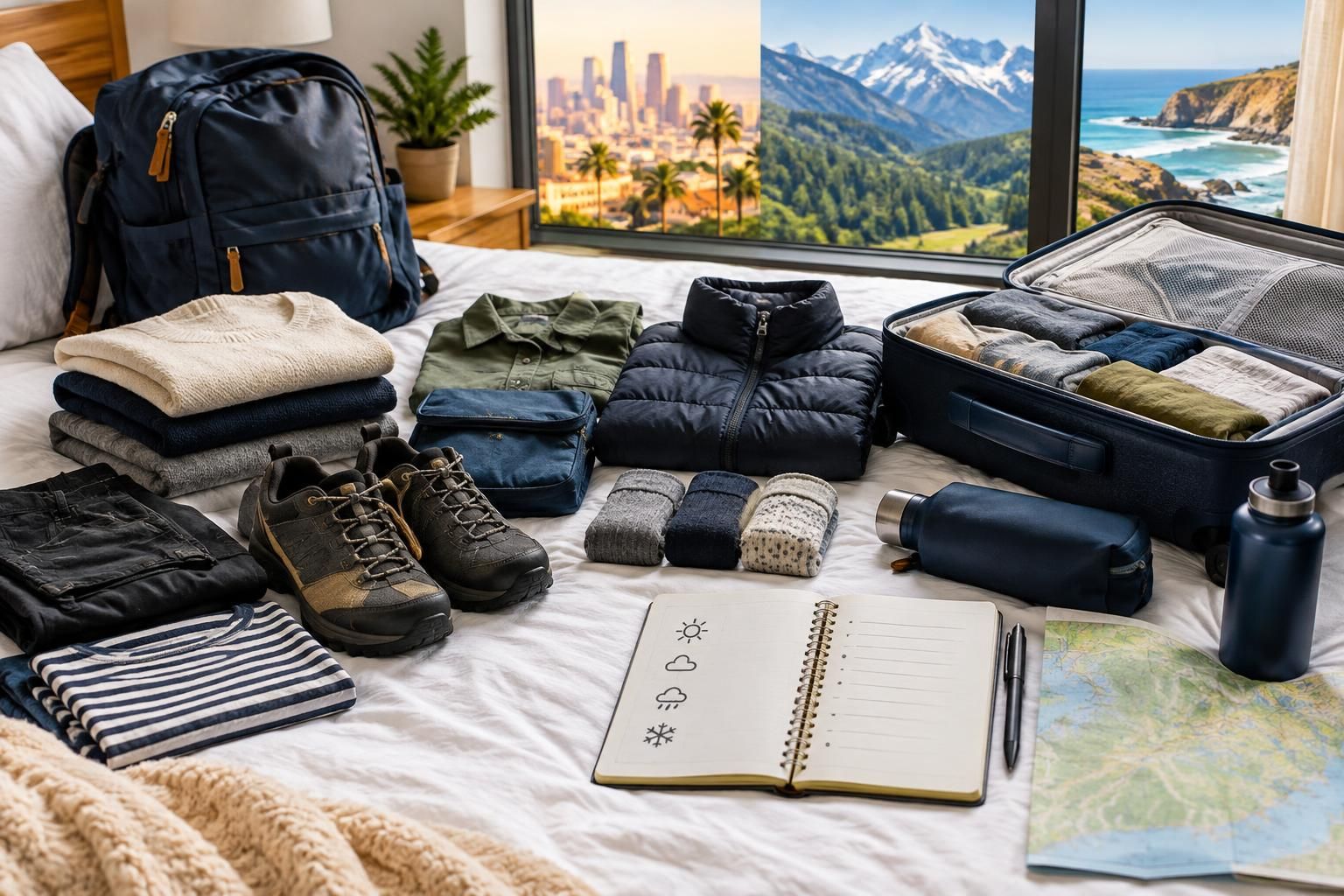
Before closing your bag, build outfits for three scenarios: your hottest sightseeing day, your coldest ordinary day and a wet travel day. Put the clothes on, including the shoes and outer layers. Check whether you can walk comfortably, sit down easily and carry your bag without overheating or feeling restricted.
Then remove items that have no clear role. Watch for duplicate middle layers, extra evening outfits and accessories included only because they are small. Leave some room so that repacking does not become a daily puzzle. Finally, lift and carry the packed bag for a few minutes. A wardrobe that fits inside your luggage but makes stairs and transfers miserable is still worth editing.
Packing for different climates works best when you plan around conditions, activities and laundry rather than destination count. Build a versatile core, add the protection your itinerary genuinely requires, and keep useful layers within reach. Testing a few complete outfits before departure can reveal gaps and unnecessary extras while there is still time to adjust.
AI-assisted evergreen travel guide. Featured image is an AI-generated illustration, not a specific product or booking.