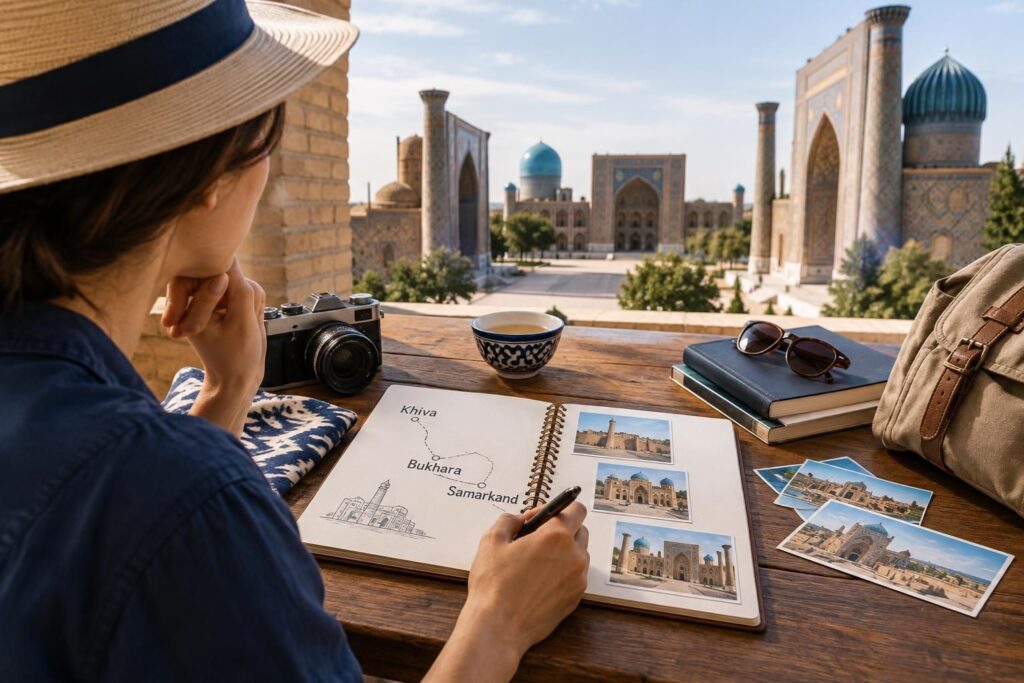

A car-free holiday does not have to mean staying in a large city. Smaller towns, coastal communities and countryside bases can offer rewarding trips built around walking and public transport. The challenge is choosing places that connect well, rather than assuming every appealing stop will fit together. Start with the transport network, then shape the holiday around it. This approach helps you spend less time solving transfers and more time enjoying the places you came to see.
Choose a connected region, not a scattered wish list
Begin with the kind of experience you want: village walks, coastal scenery, historic towns or a mix of local food and gentle outdoor activities. Then look for a region where several suitable places sit along one rail line or a manageable bus corridor. A compact cluster usually makes a stronger car-free itinerary than a collection of famous sights spread across different valleys or coastlines.
Sketch a simple transport map before researching individual attractions. Mark your arrival gateway, two or three possible overnight bases and the places you most want to visit. Notice where routes converge and where a journey appears to require backtracking. A town that looks less exciting in photographs may be the more useful base if it connects several places you want to explore.
Treat geographic closeness and transport convenience as separate questions. Two villages may be near each other on a map yet require an indirect journey. Conversely, a town farther away may be easier to reach on a direct service.
Evaluate the whole journey, including the last mile
For each potential outing, trace the route from your accommodation door to the actual entrance or starting point. Include the walk to the station, transfers, waiting time and the distance from the final stop. An attraction described as being near a town may still sit well beyond its walkable center.
Look closely at walking conditions rather than relying on distance alone. Hills, steps, unpaved paths and roads without pedestrian space can change whether a connection suits your group. Check details against your mobility needs, luggage and likely weather conditions. If an important stretch is unclear, treat that uncertainty as a planning issue rather than assuming it will be straightforward.
You might classify outings as easy, conditional or impractical. An easy outing has a clear route and manageable walking. A conditional one depends on a particular connection or arranged transfer. An impractical one requires several uncertain links for a short visit. This helps prevent one awkward excursion from dominating the trip.
Choose accommodation for access and everyday needs
For a car-free stay, the accommodation location matters as much as the destination. Compare properties by the actual walking route from your arrival stop, not just their distance from the town center. A scenic hillside location may involve a tiring climb every time you return, especially with luggage.
Check how easily you could reach meals, groceries and something enjoyable to do without boarding transport. A base with a pleasant waterfront, walkable streets or nearby trails gives you options when you want a quieter day. It also reduces the pressure to make an excursion every morning.
Before booking, confirm practical details that affect arrival: luggage storage, the check-in process and whether the property requires an arranged pickup. If a transfer is essential, establish how it would be organized and what alternatives you would have.
Check both directions before committing to an outing
An appealing outbound journey is only half the plan. Before committing to an excursion, examine the return options for your intended travel date. Services can differ by weekday, season or holiday period, so a general route description is not enough for final planning.
Work backward from a return connection you would be comfortable using. Allow time to leave the attraction, reach the stop and handle a missed turn or slow lunch. Where practical, identify an earlier departure and a later fallback rather than building the day around one indispensable connection.
Be cautious about chaining several rural stops into a single day. A simple out-and-back trip often gives you more time to explore than a technically possible circuit with multiple transfers. If two places deserve unhurried visits, give them separate days or choose the one that matters more.
Use fewer bases and keep luggage manageable
Changing accommodation adds more than travel time. You also need to pack, check out, carry bags and settle into the next place. For a week-long trip, compare a single base with a two-base version before considering a new hotel every night. Move only when the next base meaningfully improves access to a different part of the region.
Pack for the transfers you expect to make. Think about whether you can comfortably carry your bag up steps, through a station and along uneven streets. Keep essentials accessible so you do not need to open your main luggage during a connection. On moving days, avoid adding a sightseeing stop unless you have confirmed a workable luggage-storage arrangement.
Build alternatives that do not depend on perfect connections
Give each base at least one worthwhile local day that requires little or no transport. This might combine a market area, a museum and a long lunch, or a walk starting from town. It should feel like a genuine part of the holiday, not merely a consolation prize.
Budget for occasional flexibility without assuming a taxi or private transfer will always be available. If one would be essential to your plan, investigate arrangements before committing. Otherwise, simplify the route. The strongest car-free itinerary is not the one that reaches the most places; it is the one that remains enjoyable when you decide to do less.
Planning beyond major cities without a car starts with connections, walkable bases and realistic day trips. Choose a compact region, examine complete door-to-door journeys and keep the return route in view. With fewer hotel changes and worthwhile options close to your accommodation, transport becomes a manageable part of the holiday rather than the problem you have to solve each day.
AI-assisted evergreen travel guide. Featured image is an AI-generated illustration, not a specific product or booking.